Protective clothing free shipping, delivered within 5-7 days >>>
Company Tel: +86 755 27087205 Mobile: +86 13662677207 (Same number for WeChat) Email: yy@youyigarment.com

Company Tel: +86 755 27087205 Mobile: +86 13662677207 (Same number for WeChat) Email: yy@youyigarment.com
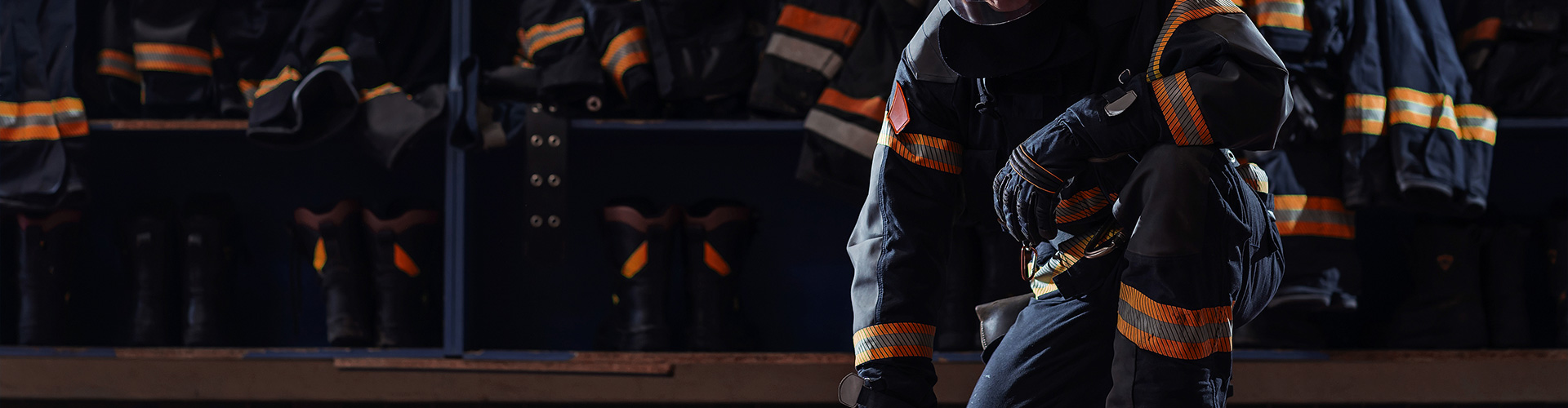
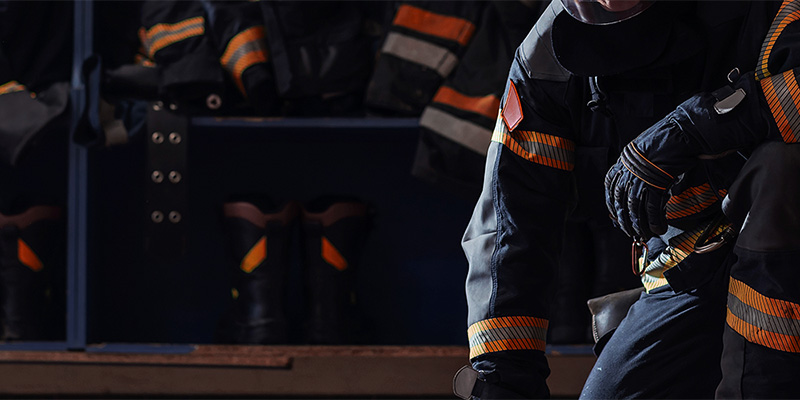
Aramid is used in flame-retardant protection not because it "does not fear fire," but because its flame resistance comes from the structure of the fiber itself. It is inherently flame retardant: it does not melt at high temperature, produces no melt droplets, and stops burning on its own once removed from the flame. The value of such fabric, however, has to be realized in the finished garment, and between fiber and garment sit weaving, dyeing and finishing, cutting, sewing and testing. Any step handled poorly discounts the good performance of the fabric.
Fiber and fabric: where protection begins The aramid used in protective clothing falls mainly into meta-aramid and para-aramid. Meta-aramid tolerates high temperature, holds its dimensions and feels relatively soft, which suits long wearing hours. Para-aramid is stronger and performs better against cutting, so it is often blended in or used for local reinforcement. Aramid on its own is costly, so practice favors blending with flame-retardant viscose, cotton or modacrylic to balance protection, comfort and price. Blend ratio changes fabric behavior: a higher aramid share raises thermal stability and resistance to melt droplets, while a higher flame-retardant viscose share improves moisture absorption and breathability at the cost of strength and abrasion resistance. When assessing fabric, look at several data sets: weight per unit area, breaking strength in warp and weft, tear strength, dimensional change after washing, thermal shrinkage, and strength retention at high temperature. Heavier fabric is not automatically better: added weight brings protection margin but also burden and heat stress, so it needs to match the workload. If the workplace also involves acid or alkali splash or UV exposure, assess strength loss of the fiber under chemical media and sunlight; aramid usually performs better than ordinary flame-retardant cotton in these conditions, but the actual medium and concentration still have to be confirmed.
Weaving, dyeing and finishing: balancing performance and appearance Weaving sets the density and structure of the fabric. A twill weave is dense and abrasion resistant, suitable for outer shells; satin feels smooth and is often used for inner layers or skin-contact areas; double or multi-layer structures separate functions, with a tear-resistant outer layer and a skin-friendly inner one. Yarn twist and weaving tension affect breathability and body, and a fabric that is too stiff tends to fatigue and split at the joints over long wear. Dyeing is the difficult part. Aramid takes dye poorly, so the common routes are solution dyeing or yarn dyeing, which give good color consistency but higher minimum order quantities; piece dyeing is more flexible, yet colorfastness and strength loss need close attention, since long dyeing at high temperature damages the fiber. Where the customer asks for water and oil repellency, anti-static or soil-release finishing, confirm whether those agents affect flame performance and breathability, and request retest data after finishing. On colorfastness, the three properties that matter in real use are resistance to washing, rubbing and light, and acceptance criteria should be agreed in advance.
Cutting and trims: the easily overlooked steps Cutting looks simple but affects cost and consistency. Marker efficiency decides fabric loss, and checked or striped fabrics need pattern matching, while excessive skew makes the finished garment twist. The number of plies per cut has to match the style, and a coverall typically involves hood, body, legs and sleeves as separate panels, so numbering and matching have to be clear or pieces get mixed at sewing. Trim selection matters more: sewing thread should be aramid or flame-retardant polyester, since ordinary polyester thread melts at high temperature and causes secondary injury; zippers, hook-and-loop fastenings and adjusters need flame-retardant or difficult-to-ignite specifications; reflective tape should be flame-retardant grade, as ordinary tape shrinks and falls away in flame. Metal components should be minimized and covered where they cannot be avoided, so no spark arises in a flammable atmosphere.
Sewing: whether the garment actually protects Sewing is where protection either carries through or breaks down. Common seam types include overlock, plain and cover stitch, and stitch length and density affect seam strength and tightness; high-stress areas such as the front placket, armhole, crotch and knee need reinforcement or double stitching. Thread tension needs control: too tight forms creases in the fabric that do not recover and speeds abrasion, too loose leaves a weak seam. The structural detail of a coverall also shows up in this operation: how hood and collar fit, how cuffs and leg openings are cinched, how the placket is layered for coverage, and whether an inner lining or crotch zipper is needed. Ventilation openings must avoid surfaces directly exposed to flame while still allowing sweat to escape. After sewing, appearance and dimension checks should cover loose threads, skipped stitches, missed seams and zipper smoothness, because such defects are magnified in a protective setting. Where the style includes a face shield or head hood, confirm the brow support, the shield mounting and the field of view at the sewing stage so the wearer's sight is not blocked after assembly.
Testing and validation: let the data speak Testing of flame-retardant protective clothing is never a single item. Flame performance is usually read through after-flame time, after-glow time, damaged length and whether melt droplets form; thermal protection is assessed by thermal protective performance testing or an instrumented manikin, reflecting how the fabric blocks radiant and convective heat. Fabric strength, tear strength, colorfastness, dimensional stability after washing and retention of flame performance also belong on the list. Different markets map to different standards families, and the EU, North America and China each have their own test methods and grading requirements, so the target market and applicable standard should be nailed down at purchasing, with third-party reports naming the lot and the laboratory. Retesting after industrial laundering matters especially, and the wash count should follow the customer's actual laundering conditions rather than copying a generic figure. Batch consistency needs verification as well: if color, weight and hand feel vary noticeably between lots of the same fabric, the finished garments will look like they came from different suppliers at delivery. Retain a sealed reference sample after the sales sample is approved, sample flame performance, weight and color difference per lot in production, and keep the records for traceability.
Volume management and delivery From sample approval to batch delivery, management detail shapes the experience. At the sample stage, confirm the size system and fit: a coverall demands more of height and body shape, and scaling from standard sizes alone often leaves a tight crotch or loose shoulders. At volume, watch sewing hours, line balance and capacity flexibility, and lock in peak-season scheduling early. Numbering and lot traceability help after-sales locate problems, and packaging should address moisture, compression and legible marking. Replenishment capability is worth assessing too: protective clothing is a consumable, and safety stock for common sizes plus fabric consistency across lots both affect the replacement rhythm on the user side. In price negotiation, costing fabric, trims, sewing hours, testing and packaging separately makes it easier to judge whether a figure is reasonable than comparing totals alone.
Read fiber, weaving and finishing, cutting and trims, sewing, testing and volume management as one connected line, and evaluation gains a footing. Aramid performance is written into the fiber; the reliability of protection is written into the process.


© 2026 Youyi Protection Privacy and Security

 CN
 Return
