Protective clothing free shipping, delivered within 5-7 days >>>
Company Tel: +86 755 27087205 Mobile: +86 13662677207 (Same number for WeChat) Email: yy@youyigarment.com

Company Tel: +86 755 27087205 Mobile: +86 13662677207 (Same number for WeChat) Email: yy@youyigarment.com
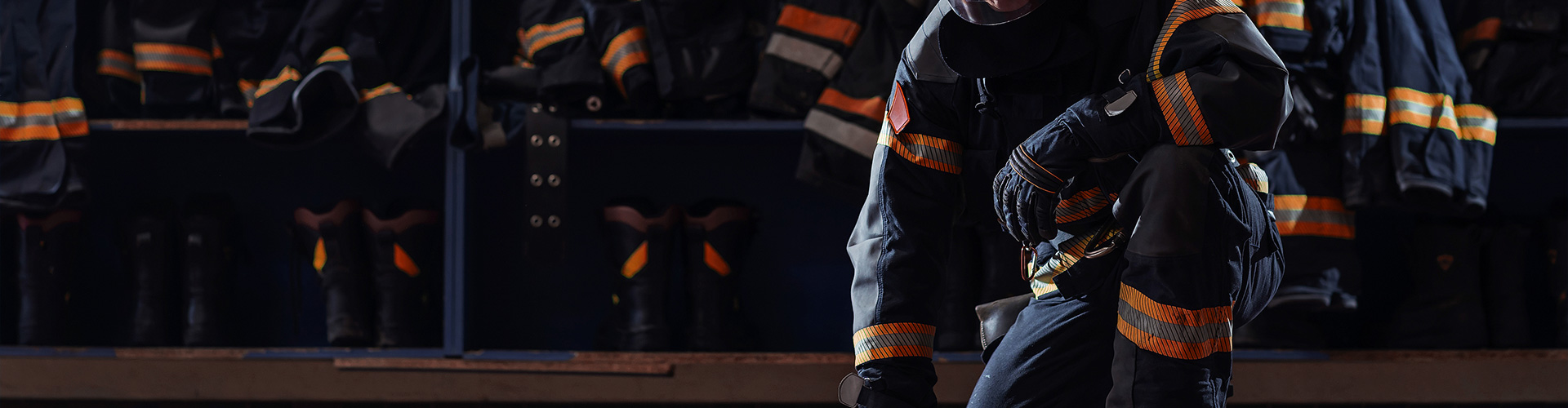
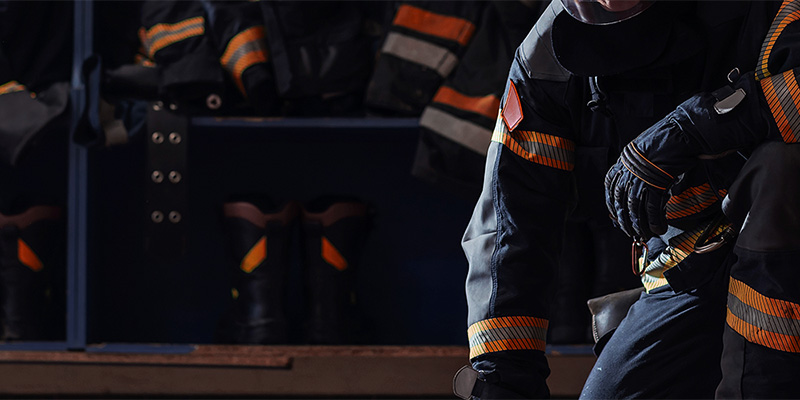
Fire rescue scenarios are complex and volatile, with overlapping multiple risks such as high-temperature scorching, flame burning, chemical corrosion and mechanical wear. As the core personal protective equipment for firefighters, the professional fire fighting suit’s protection performance, comfort and durability are directly related to the life safety and operational efficiency of rescuers. From the perspective of research and development, the iterative upgrading of professional fire fighting suits always focuses on four core directions: extreme safety, scenario adaptation, lightweight wearing and long-term performance, breaking through the bottlenecks of traditional fabrics, structures and processes, and fully adapting to the actual combat needs of full-scene fire rescue.
The innovation of material system is the fundamental core of fire fighting suit R&D and the key to improving core protection capabilities. Traditional fire fighting suit fabrics have shortcomings such as low protection ceiling, heavy weight and poor weather resistance, which are difficult to adapt to high-risk scenarios such as extreme high temperature and flash fire impact. Current R&D focuses on high-performance composite fiber systems, abandoning the limitations of single materials, and adopting a three-layer composite structure with high-strength outer protection, middle heat insulation buffer and inner breathable and moisture-conducting layer. The outer layer adopts self-developed modified aramid mesh reinforced fabric. Through optimized rib weaving technology, its mechanical properties and thermal stability are greatly improved, with 20%-30% higher breaking strength and 2-3 times higher tearing strength. It can withstand short-term flame impact of 800℃ and long-term high-temperature baking of 400℃. The low-emissivity coating effectively blocks thermal radiation and prevents internal heat penetration. The middle layer adopts aerogel heat-insulating needle-punched felt to build a buffered heat insulation layer based on the air heat insulation principle, increasing the overall thermal protection performance (TPP) to more than 35cal/cm² while controlling fabric thickness to achieve efficient heat insulation. The inner layer adopts a unidirectional moisture-conducting and antibacterial comfort fabric, with moisture absorption weight gain controlled below 30% of ordinary fabrics. It balances moisture absorption and perspiration with antibacterial protection, maintaining excellent antibacterial effect after 50 washes, and solving the pain points of stuffiness, peculiar smell and bacterial growth during long-term wearing.
Modular structural optimization is the core breakthrough of this R&D, balancing complete protection and operational flexibility. Aiming at the industry pain points of traditional fire fighting suits such as stiff version, limited joint movement and poor accessory adaptability, the R&D team innovatively adopts a modular integrated combined structure and optimizes ergonomic tailoring. Double-layer reinforcement is applied to high-frequency moving and vulnerable parts such as shoulders, elbows and knees to improve tear and wear resistance. Meanwhile, the accessory adaptation system is upgraded to realize quick disassembly and replacement of gloves, boot covers and windproof cuffs, adapting to multi-scenario operations such as fire extinguishing, water rescue and low-temperature emergency rescue. The clothing sealing structure is specially optimized in accordance with industry pressure-bearing standards. The seams have no deformation or fracture under 100N tensile load with qualified hydrostatic pressure resistance, effectively preventing the penetration of open fire, high-temperature water vapor and corrosive liquid. The version fits the human movement trajectory, greatly reducing redundant wearing resistance and ensuring the flexibility of firefighters in high-intensity operations such as climbing, crawling and emergency rescue.
Iterative process and performance balanced R&D solve the industry contradiction between protection and comfort. Most traditional fire fighting suits have the drawback of "prioritizing protection over comfort", and thick fabrics easily lead to rapid physical exhaustion of rescuers. Through the upgrading of three core processes including refined dyeing and finishing, seamless fitting and lightweight weaving, this R&D strictly controls the overall weight of the suit with the standard model ≤2.65kg without reducing protection indicators, realizing the balance of high-strength protection and lightweight performance. At the same time, the fabric weather resistance process is optimized with fluorine-free environmentally friendly water-repellent finishing technology. The fabric water contact angle is ≥130°, maintaining above level 3 water resistance after 10 washes, with excellent waterproof, oil-proof and antifouling properties. The high-temperature resistance and aging resistance are optimized for extreme working conditions. After 180℃ high-temperature stabilization treatment, the fabric size change rate is ≤2% without melting or smoldering. It can maintain stable protection performance after multiple washing cycles, greatly extending the service life of the equipment.
In general, the R&D of professional fire fighting suits is always guided by actual combat needs, centered on material innovation, supported by structural optimization and guaranteed by process upgrading. Through multi-dimensional technological breakthroughs, it solves core problems such as extreme environment protection, ergonomic adaptation and long-term durable use, develops full-scene, high-performance and highly adaptable professional fire protection equipment, builds a solid safety technical barrier for fire rescue work, and promotes the iterative upgrading of fire protection equipment towards intelligence, lightweight and high-end orientation.


© 2026 Youyi Protection Privacy and Security

 CN
CN Return